
 See My Latest Article on HelloNation
What Should Residents Expect When Requesting a Tow?
Residents in Slidell, LA who need a tow often wonder what the process involves, how quickly help will arrive, and what might be required of them. Generally, requesting a tow is straightforward, though local weather, traffic patterns, and regulations may affect details. Here’s a clear look at what typically happens and what residents can expect.
What Information Will You Need to Provide?
Expect to answer a few questions before a tow truck is dispatched. Providing clear, detailed information can help the tow operator locate you faster and bring the right equipment.
Most tow confirmations require:
- Your exact location (an address, a business landmark, or a highway mile marker)
- Description of your vehicle (make, model, color)
- The issue (engine problem, flat tire, accident, etc.)
- Whether your car is driveable or stuck
- Destination for your vehicle (home, repair shop, safe lot)
If you’re located on one of the local highways or rural roads, try to provide any close cross streets or visible landmarks. Service access may take longer during heavy rains or if local roads are affected by flooding—common after storms in this area.
How Long Does It Usually Take for a Tow Truck to Arrive?
Response times in Slidell depend on multiple factors, including time of day, weather, traffic, and current demand.
In typical conditions:
- Wait times within the city may range from 20 to 60 minutes.
- Peak traffic, severe weather, and flooded areas can extend wait times, especially during summer storms or local events.
Residents stranded at night or on less-traveled roads should remain inside their vehicle if safe and make themselves visibly identifiable to approaching tow trucks (such as by turning on hazard lights). Patience is often necessary when the city faces back-to-back calls during severe weather.
What Happens When the Tow Truck Arrives?
When the tow truck arrives, the operator will assess the situation and confirm the details you provided during your call. For most routine breakdowns or flat tires, the process is smooth and takes just a few minutes of interaction.
A typical sequence includes:
- The driver checking for your safety first
- Confirming your vehicle and your requested destination
- Performing a quick lookover to determine the safest towing method
- Explaining any issues (such as a locked steering wheel or blocked access) if relevant
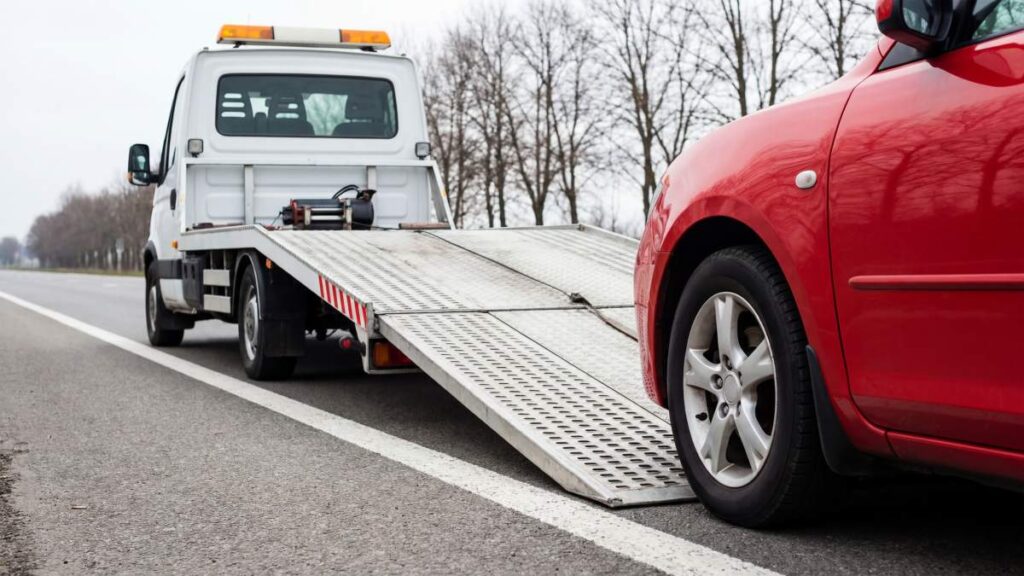
In Slidell, tow operators often deal with roadside drainage ditches or soft shoulders due to the area’s geography, so the type of truck sent—flatbed or wheel-lift—may be selected accordingly. If your vehicle is off-road or on a muddy shoulder, extra equipment may be necessary.
What Should You Do While Waiting?
Stay safe and visible. If you’re on a roadside or the weather is poor, remain inside your vehicle with seatbelts on, hazard lights flashing, and doors locked until the tow arrives. In summer, sweltering heat may make it uncomfortable to wait outside, while in winter, evening temperatures can drop quickly near Lake Pontchartrain.
If you feel uneasy or your vehicle is in a dangerous spot, local authorities—such as the police or sheriff—can also be notified for added safety, especially at night or on less-trafficked stretches.
Will You Need to Be Present During the Tow?
Usually yes, at least for the initial handoff. The tow operator will need keys and, in some cases, may ask for photo identification to confirm ownership or authorization. If you must leave your car, clarify instructions with the dispatcher for key handoff and destination details.
If your vehicle needs to be released from a private lot or impound, area regulations may require you to show ownership documentation or pay a release fee before towing can commence.
What Are Common Misconceptions?
A few misconceptions often arise about the towing process—especially among those unfamiliar with local conditions.
- Some expect the process to be instant; in reality, arrivals fluctuate based on local road and weather conditions.
- It’s a myth that all tows cost the same—fees can differ depending on location, time of day, vehicle type, and if extra services (like winching from mud) are needed.
- Many overlook the importance of precise location info; vague directions can delay service in the community’s more rural or less developed neighborhoods.
What If Severe Weather Is Happening?
In Slidell, rainstorms and flash flooding can impact both driving conditions and towing logistics. Operators often prioritize emergencies or vehicles in unsafe spots when weather makes travel hazardous.
If storms or flooding are expected, be ready for the possibility that tow trucks may take alternate routes or require additional time to reach you. It’s a good practice to monitor local weather updates and to have a backup plan in case roads become impassable.
Do Towing Services Handle All Vehicle Issues?
Not all situations require a full tow. Some providers in the area offer jumpstarts, tire changes, or lockout help. If you only need a minor assistance (like a dead battery), clarify this during your call to save time and expense.
Certain incidents—such as vehicles blocking major routes, being involved in accidents, or left unattended in hazardous locations—may require involvement by local law enforcement, and often have separate protocols.